

Women continue to carry the scars of incarceration beyond prison walls
Frequently overlooked in criminal justice discussions, they have become one of the fastest-growing populations in the U.S. correctional system.
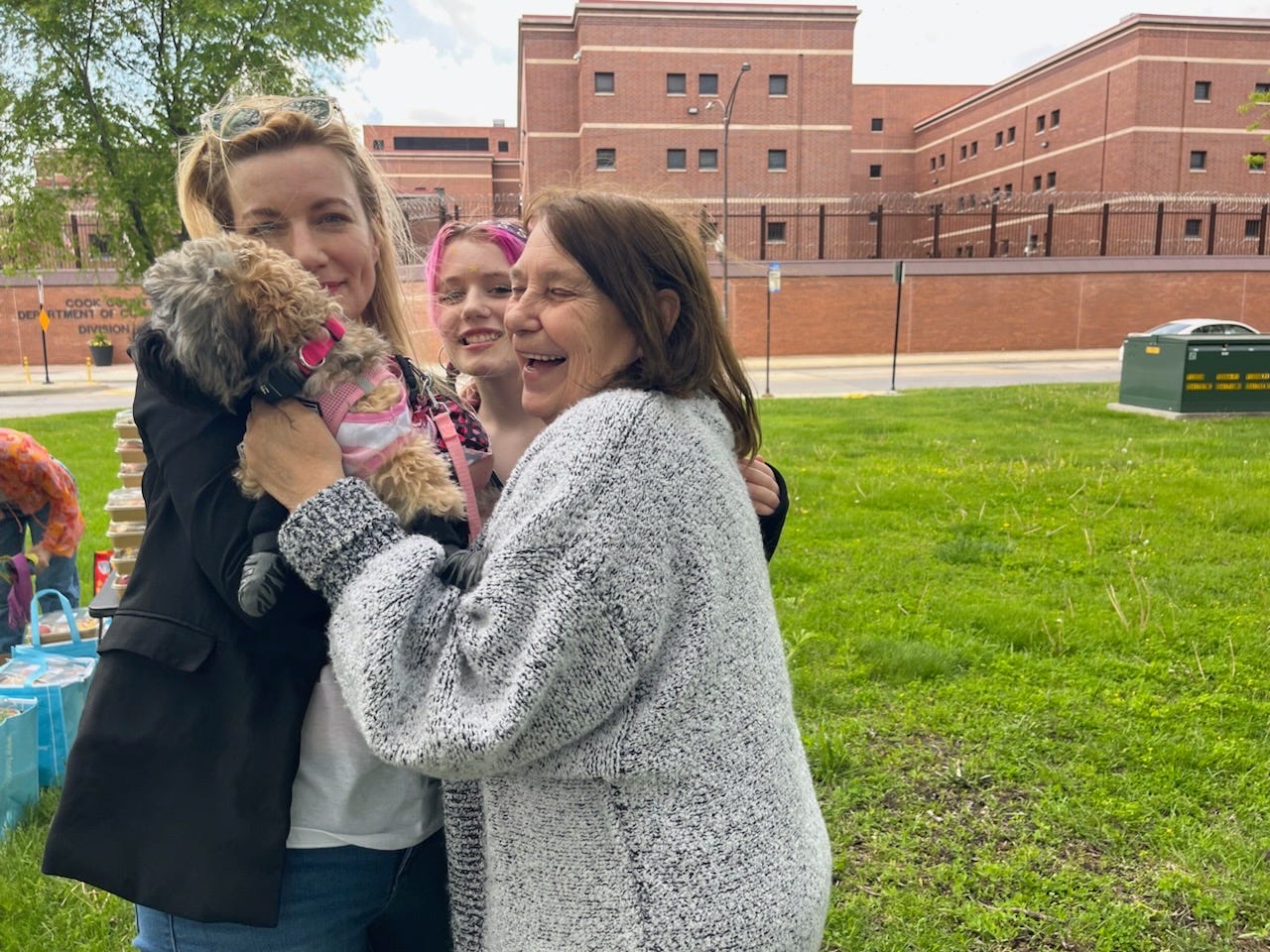
After 37 years of incarceration for killing her abusive husband, Janet Jackson (light gray sweater) was released in February 2024. While at Logan Correctional Center in Illinois, she earned two Ph.D.s, became an ordained minister, and devoted herself to mentoring fellow incarcerated women. (Photo courtesy of Janet Jackson)
INCARCERATED WOMEN: Obstacles and Advocacy: Click here for slides.
By Gia Liu, Olivia Payne, Ereny Tanious, Amani Yousuf
After her release on parole in 2024 following 37 years of incarceration, Janet Jackson became an advocate for incarcerated people, arguing that the prison system “has gotten so much worse for women,” who face higher mortality rates—including suicides, according to the JAMA Internal Medicine.
Jackson, 72, was initially sentenced to life for her connection to the attack that killed her abusive husband, according to the Illinois Prison Project. Since her release, Jackson vows not to leave others behind, remaining dedicated to prison reform for the gender-based challenges women face.
“Men do time, hard time, they do physical time,” said Jackson, who earned two Ph.D.s, became an ordained minister and mentored disabled and elderly women while incarcerated. “Women, we do emotional time. We carry all the burdens in our head and our hearts.”
Jackson is part of a broader movement of formerly incarcerated women advocating for reform.
Maria Garza’s commitment to prison reform began during her 12 years in state prison. Now a restorative justice practitioner and activist, Garza said her experiences behind bars continue to drive her work supporting incarcerated people and confronting the obstacles women face during incarceration and re-entry.
“System-impacted women often face obstacles that extend far beyond finding a job or a place to live,” said Garza, 52, who recently earned her bachelor’s degree from Northwestern University, in an email. “Many return to their communities carrying the effects of trauma, separation from their children and families, limited financial resources, and the stigma associated with having a criminal record. In addition to this, many exhibit patterns of past behaviors, for example, having to hustle the system.
One of fastest growing segments
Garza said her organization provides a range of reentry services, including housing and transportation assistance, help obtain identification, employment and educational referrals, digital and financial literacy training, life skills development, and access to behavioral health and substance use treatment services when needed.
Women represent one of the fastest-growing segments of the incarcerated population. From 1980 to 2023, the number of women behind bars surged more than 600%, from 26,326 to 186,244. A temporary decline during the COVID-19 pandemic gave way to a 22% increase in 2023, according to The Sentencing Project.
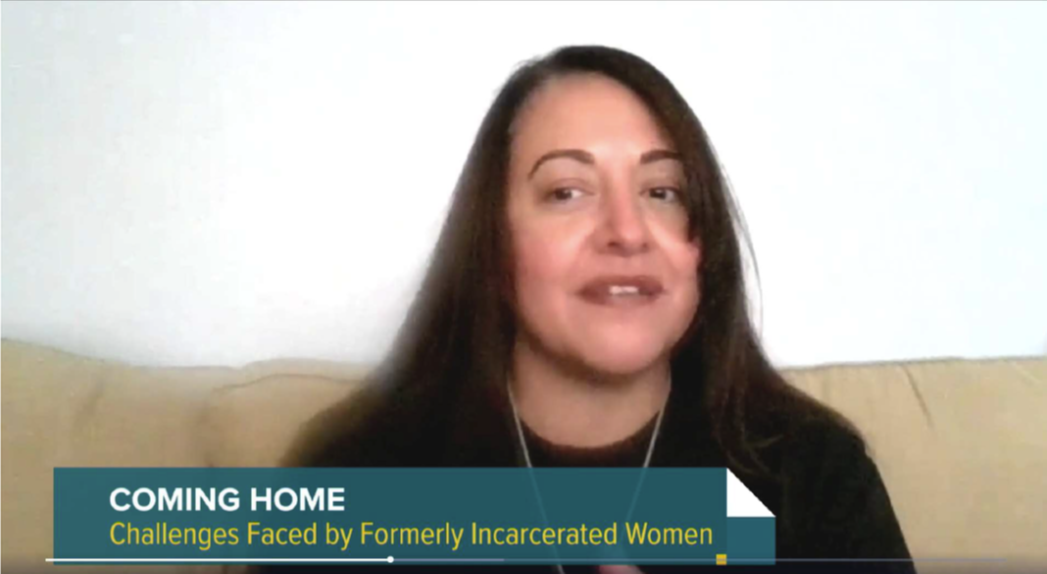
Maria Garza, a recent Northwestern University graduate, has said her 12 years in state prison inform her work in restorative justice, including advocacy for incarcerated people and attention to barriers faced by women during incarceration and re-entry. She and Javier Reyes co-founded Challenge II Change, a nonprofit providing pre-release and re-entry planning and resources. (TV image via WTTW/ click: video link
“We also help women navigate family reunification, legal barriers and community resources that can often feel overwhelming after incarceration,” said Garza, who co-founded Challenge II Change, a nonprofit organization based in Aurora, Illinois, with Javier Reyes. The organization focuses on criminal justice reform and restorative justice.
Obstacles unique to incarcerated women can start before they enter a prison. According to the Council on Criminal Justice, more than 70% of incarcerated women report prior experiences of domestic violence.
“I have never met anyone in there who did not suffer from some form of domestic abuse,” Jackson said.
This violence continues into incarceration, where sexual assault, harassment and extortion remain significant issues, according to the Bureau of Justice Statistics, responsible for measuring crime, criminal victimization.
According to the federal agency, Logan Correctional Center, a multi-level security women’s prison and intake facility, is one of 17 prisons nationwide with the highest sexual victimization rates. Logan, about 150 miles south of Chicago, is one of two main women’s prisons in Illinois and the state’s only women’s prison above minimum security.
Furthermore, the CCJ reports that more than half of incarcerated women are parents to minor children, and mothers were twice as likely as fathers to be sole caretakers.
“Their incarceration put them in so much more peril than for somebody who’s not a primary caretaker,” said Christina Rivers, a political science professor at DePaul University’s Inside-Out Prison Exchange Program, “because then they run the risk of losing your kids.”
Women also have specific health-related issues regarding menstruation, pregnancy, mental health and substance use disorders.
“A categorically different reality”
Professor emerita Barbara Shwom, publisher, editor and writing coach of Northwestern Prison Education Program’s magazine, Northwestern Insider, shared the story of a student whose fibroids leave her incapacitated during her menstrual cycle as she awaits surgery after three years.
“That’s not an unusual timeline,” Shwom said.
Incarcerated women face “a categorically different reality” than men, according to Joe Rice, a criminology professor at DePaul who teaches incarcerated women for the university’s Inside-Out Prison Exchange Program.
Deanne Benos, former assistant director of the Illinois Department of Corrections, left her position after efforts to treat these differences for women failed. Benos said that the women leading those advancements were demoted and the division supporting them was “struck on paper.”
Benos, like other prison reform advocates, turned to external sources to fill these gaps for incarcerated women.
After leaving IDOC, Benos co-founded the Women’s Justice Institute to reduce female incarceration and improve prison conditions through gender-responsive research and programming.
The WJI’s Women’s Justice Pathways Model focuses on relationship safety, health, families, housing and economic security and empowerment.
“What the WJP represents is really a paradigm shift,” Benos said. “When you say criminal justice, that means prisons, paroles, police parole, all those things. We kinda just wanted to flip it and say justice is these five areas.”
Justice is also a priority for Uptown People’s Law Center, which addresses issues affecting incarcerated communities through legal action.
The clinic has filed seven lawsuits about sexual abuse by staff members at Logan, aiming to “shine a light on what these women have to go through and how horrific it is,” said Maggie Bourke, a fellow at Equal Justice Works.
Bourke views UPLC’s work as a way to hold prison staff accountable and make an impact.
“There’s not a lot that the outside world can do to force prison officials to treat people better,” Bourke said.
Other programs focus on providing support through education and activities.
NPEP offers incarcerated students a pathway to earn a Northwestern bachelor’s degree while in prison. However, this opportunity is often more limited for women, according to Jennifer Lackey, founding director of NPEP, because Illinois’ primary women’s prison is much farther away than the men’s prisons.
“Women, I think on the side of programming are just systematically disadvantaged,” Lackey said, adding that NPEP is the only program in Illinois offering bachelor’s degrees to incarcerated women.
Shwom reports similar issues with Northwestern Insider programming at Logan, with visits limited to about once a month, compared to weekly classes at Sheridan Correctional Center, approximately 70 miles west of Chicago.
Northwestern Insider provides incarcerated individuals with an outlet to publish writing and artwork, enabling them to share their experiences and advocate for issues affecting prison communities. Shwom said she aims to dedicate 25% of the magazine to content from Logan.
“They are all three-dimensional, interesting women who are often not seen that way,” Shwom said. “To write from their experience is an opportunity to be known more fully for who they are.”
The magazine also connects students to publications and contests that offer monetary rewards, one of few opportunities for individuals to make money while incarcerated.
Beyond organizational support, several interviewees said incarcerated women need personal support.
“You find out who really loves you when you’re locked up,” Jackson said. “I’m not talking about supporting you financially, I’m talking about that emotional support which is so much more valuable than finances.”
Advocates said that support begins by recognizing the humanity of incarcerated women, beyond their convictions.
“I think that one of the things that’s really important is to change the narrative about who are behind these bars,” Lackey said. “They are some of the most generous, honest, remarkable people.”