

Trump funding cuts threaten legal aid in Illinois

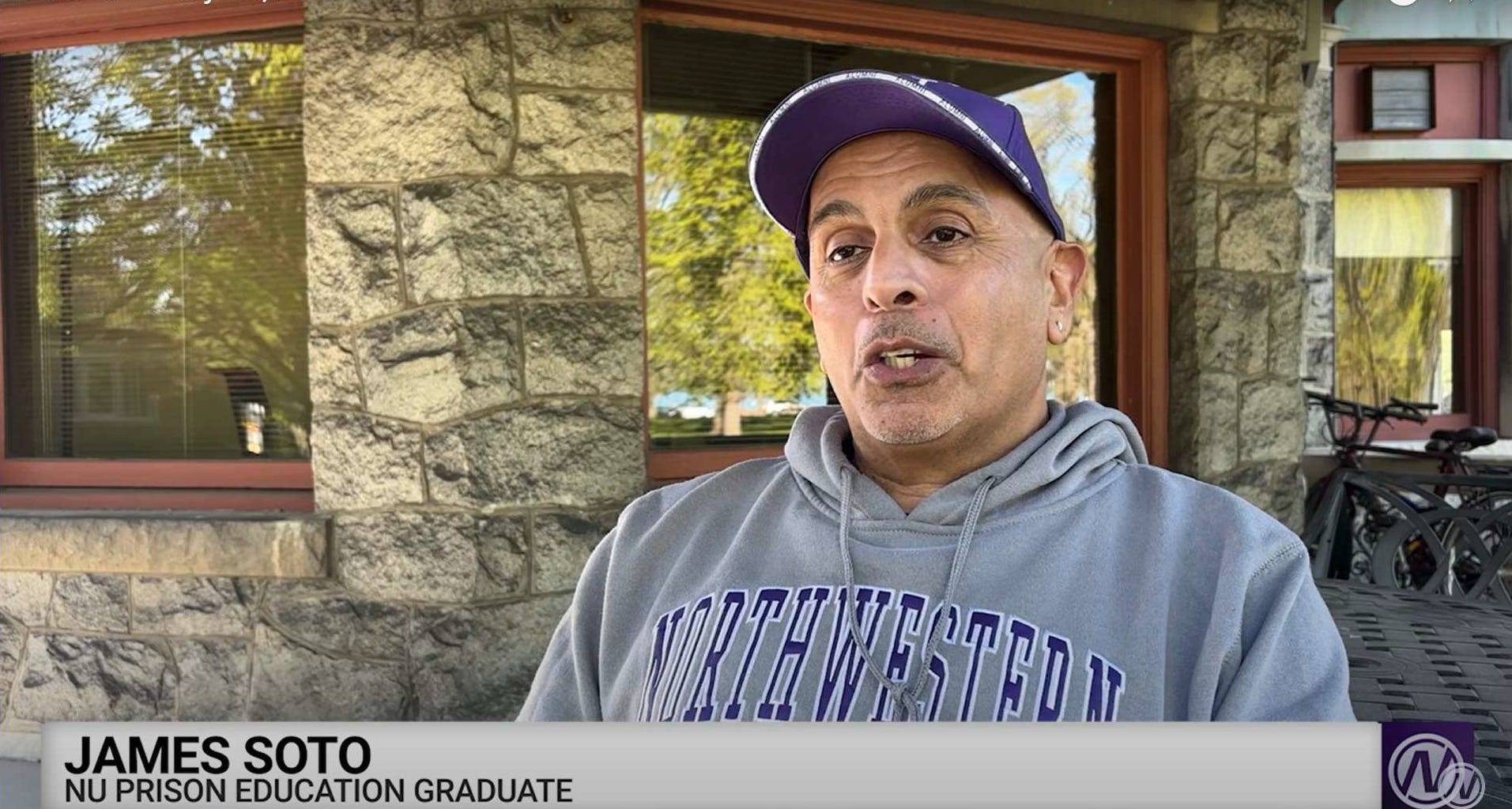
James Soto, Illinois’ longest-serving exoneree, said fears about potential funding cuts to legal agencies echo the effects of President Ronald Reagan’s budget reductions. (TV image courtesy of Zoe Singer/Northwestern News Network/click: video link
By Karina Eid, Kamran Nia, Zoe Singer, Maiya Wahl, Aidan Weiss
Pablo Mendoza, 47, spent over two decades in Illinois’ carceral system, devoting much of his time to fighting his own legal battles. While in prison, Mendoza became a legal adviser, also known as a “jailhouse lawyer,” to other incarcerated individuals.
Since his release from prison in 2020, Mendoza continues to offer legal assistance to those involved in the criminal legal system, a job that he said triggers traumatic memories. He said he still remembers the anxiety of arguing his case in the courtroom.
“You have that impostor syndrome immediately,” Mendoza said. “Your brain is clouded through all these chemicals that are running through there, and you're not your best self.”
Mendoza is among the thousands of people who have represented themselves in Illinois courts every year. But as legal aid agencies brace against the threat of funding cuts, self-represented litigants will have fewer resources to help them fight their cases.
Illinois JusticeCorps, an organization that helps self-represented litigants navigate the civil legal system, received a stop work and grant termination order from the AmeriCorps volunteerism program on April 28. The directive followed President Donald Trump’s nearly $400 million slash on AmeriCorps grants nationwide.
“It was kind of not if, but when, it was going to be our turn,” said Jenna Kearns, the JusticeCorps program director. “It was shocking and disheartening.”
After scrambling to secure alternative resources to keep the JusticeCorps operating through August, program coordinators said the organization is now in limbo, as coordinators determine how to continue the program’s mission in the absence of federal funding.
Kearns said the JusticeCorps is “integral” in offering assistance to self-represented litigants, especially in civil cases.
Defendants only have a right to an attorney in criminal cases. Generally, litigants are not entitled to representation in civil matters, such as divorce, eviction and small claims cases. Legal experts said finding and affording professional representation is not always feasible.
“Courts will have to reckon with the fact that there will always be a large number of people who don't have access to an attorney,” Kearns said. “[The JusticeCorps] is one tool that can be used to try to help mitigate some of those barriers and challenges that people face.”
Both legal experts and self-represented litigants report extreme challenges in litigating without counsel. Self-represented litigants often devote a significant amount of time to building their case, potentially interfering with their employment or childcare obligations. Conducting research, contacting courthouses and e-filing documents can also present logistical hurdles.
Shari Stone-Mediatore, director of Education at Parole Illinois, independently advises incarcerated self-represented litigants and said courts use legal jargon to “maintain power hierarchies,” disadvantaging self-represented litigants.
“Lawyers go to school for three years to learn this, and then you have people in prison who oftentimes don't have a high school education, let alone a college education or a law degree,” she said. “They need to learn all these legal terms and legal procedures before they even know what documents to look for.”
JusticeCorps leaders are discussing ways to salvage at least some parts of the program. Still, some courthouse advisers said they are bracing for more clients and busier schedules if the JusticeCorps is shuttered in the coming months.
Kathryn Huber Kenyon, a supervisory attorney at Legal Aid Chicago, said she has already seen “an increase in traffic” at her organization’s help desk since the JusticeCorps lost its federal funding. She said she was not surprised by the cutback in support for self-represented litigants.
“Intuitively, sometimes people think if you’re not entitled to a lawyer in a civil proceeding, you don’t really need a lawyer, so that's an easy place to make a funding cut,” Huber Kenyon said. “That just could not be further from the truth. The whole system breaks down when people are not represented in large numbers.”
While many of Trump’s funding cuts have sent shock waves throughout the nation, Huber Kenyon and others familiar with the legal system said reductions in legal support are not unprecedented.
James Soto, 63, an exoneree and Northwestern Prison Education Program graduate, said he watched support for accessible legal aid fluctuate throughout his 42 years in prison. Specifically, he said concerns that legal agencies may lose their funding are reminiscent of the impact of President Ronald Reagan’s budget cuts.
Reagan proposed eliminating the Legal Services Corporation, the largest contributor to organizations offering civil legal aid to low-income Americans. Rejecting that proposition, Congress instead cut 25% of its funding for the program, forcing the closure of 285 legal aid offices around the country, according to the LSC’s website.
“This is not fiscally responsible when you are cutting off funding to those that are most impacted by a system which is further keeping them marginalized, and keeping them in prison and keeping people on their way to prison,” Soto said.