

SMART combats substance use disorder at the Cook County jail

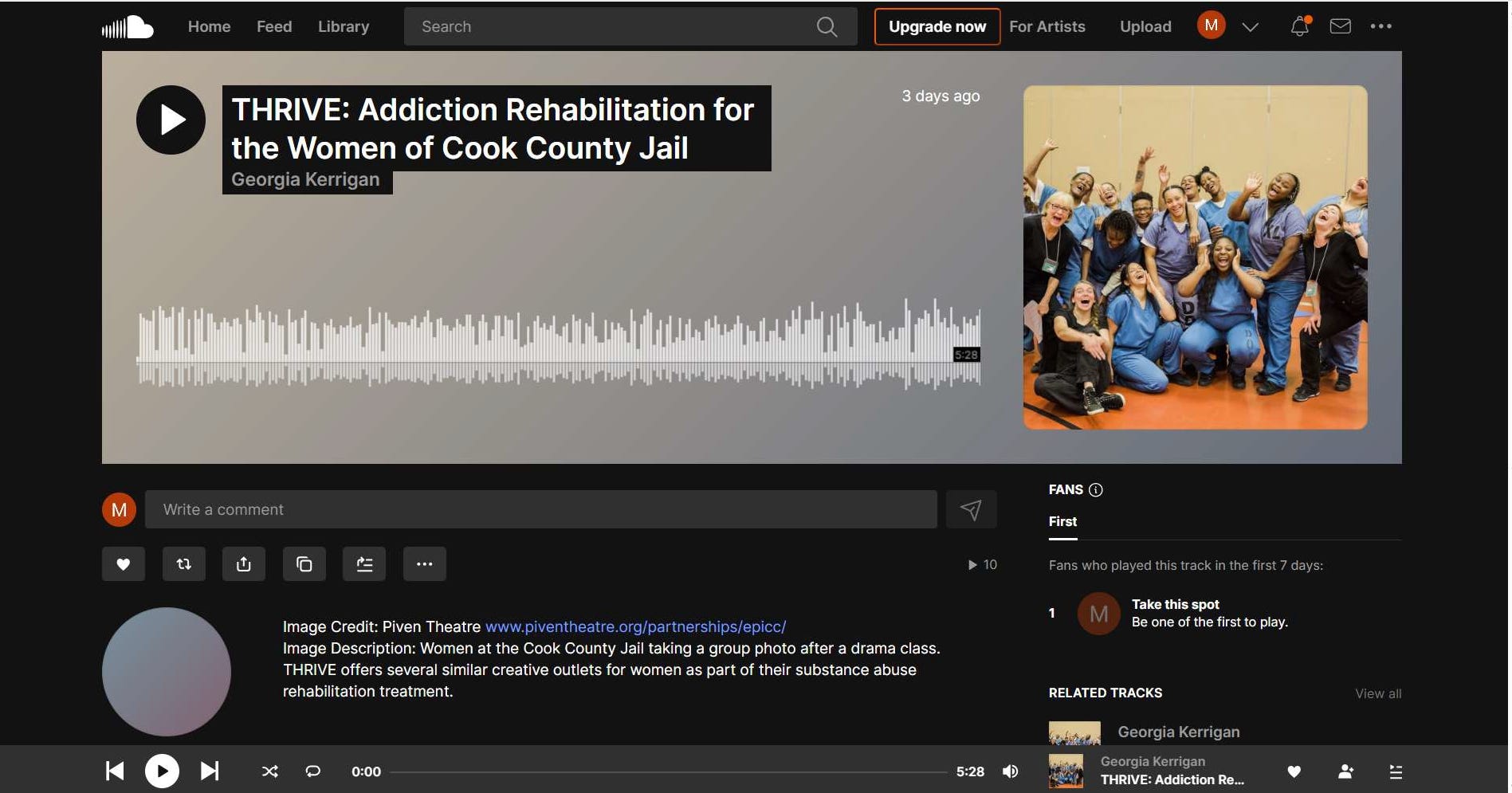
SIDEBAR Feature: THRIVE: Addiction Rehabilitation for the Women of Cook County Jail (w/script)
By: Carlotta Angiolillo, Evelyn Heath, Georgia Kerrigan, Sammy Krimstein
When it comes to rehabilitation in the legal system, Xavier Perez said he likes to compare crime and substance use to the runny noses and splitting headaches that accompany a cold.
“If you’re just taking medicine to deal with those issues, then all you’re doing is dealing with the symptoms,” Perez said. “Because we only deal with symptoms [of crime and substance use] in terms of criminal justice policy, then we never deal with the causes of it.”
Perez, an assistant professor and co-founder of DePaul University’s criminology department, advocates for a different approach to substance use within the legal system, stating that “treatment produces better results than punishment.”
Since 2020, the Cook County Sheriff’s Office has done just that, said Perez — providing group counseling and individual therapy for incarcerated individuals in the Cook County Department of Corrections through the Sheriff’s Men’s Addiction Recovery Tiers, commonly known as SMART program.
SMART is court-ordered and typically lasts 90 days, although judges can adjust the program length for each individual. According to CCSO, the program has 146 men enrolled and employs 17 staff members as of May 9.
The program exists alongside numerous other groups, including the Therapeutic Healing Recovery Initiative for Vitality and Empowerment, or THRIVE program, which provides similar rehabilitative services to the CCDOC’s female population
The THRIVE framework is similar to SMART, but with fewer participants and additional female empowerment initiatives, according to Joseph Rice, an instructor in DePaul’s criminology department who volunteers for the group.
SMART Deputy Director Mary Coulibaly said that to be admitted into SMART, individuals must be free of disciplinary issues for 90 days prior to the start of the program. Program refusals are reevaluated after a period of being incident-free.
Officials from the CCSO sometimes recruit individuals they believe would benefit from the program, according to Coulibaly. She said that if an individual is interested, they work with their legal team to secure a court order from a judge.
“I always say, I have an honor of overseeing this program,” Coulibaly said. “It is a very special program.”
Dr. Keyuana Muhammad, who works alongside Coulibaly as the assistant executive director at CCDOC, said that SMART does not typically service maximum security individuals. However, Muhammad said, the team is making frequent exceptions because of demographic shifts in the jail due to the Illinois Pretrial Fairness Act.
The legislation, in effect since 2023, was aimed at securing pretrial release for nonviolent offenders and has resulted in a higher proportion of maximum-security individuals at the CCDOC, according to Muhammad.
Perez, an advocate for criminal justice reform, said he applauds the work done at SMART. He said the program helps combat traditional criminal justice frameworks, allowing people to heal themselves and make amends with their communities.
Perez emphasized the importance of providing resources for individuals once they reenter society. He said that this is especially important when people are going back into “that same environment” where they had the “temptation” and “triggers” of addiction.
Coulibaly said that reentry care has been one of SMART’s greatest additions. The SMART program has three reentry care coordinators who handle alumni in need of support after reintegration into the community, and has merged with another CCSO program to provide community-based care for those experiencing opioid use challenges.
“Seeing our individuals engage and really take life under their own terms, once they are sober and once they are stable, is really awesome to see,” Coulibaly said.
Aaron Johnson, a professor and director of Augusta University’s Institute of Public and Preventive Health, said there is a need for more substance use treatment programs in carceral institutions.
With more than 30 years of experience in substance use, prevention and treatment, Johnson said that Cook County’s addiction treatment programs are possible because of how large the jail is.
“There are not a lot of places that offer substance use treatment within correctional settings, particularly in a jail,” Johnson said.
As SMART has grown, so has demand for the program, with refusals increasing since 2020 according to a 2024 Sheriff’s Office Semiannual Behavioral Health Report.
“While we would like to serve everybody here, we just can’t, because we don't have the manpower to,” Coulibaly said.
Perez said a downside is that treatment programs are nevertheless entrenched in punishment, operating under the criminal legal system. But proponents of SMART and its associated programs see them as a novel way to combat drug use through the carceral system, citing the post-incarceration treatment and community-based elements as unique.
Through collaborations with correctional partners across the country, Muhammad views Cook County as a blueprint for fighting the national drug crisis.
“I would go out and venture to say that we're kind of leading the way in some of those efforts,” Muhammad said.
Carlotta Angiolillo, Evelyn Heath, Georgia Kerrigan, Samuel Krimstein