

No-cash bail "accomplishing its goals" in Illinois
But experts say Pretrial Fairness Act created burdens for some judges, lawyers
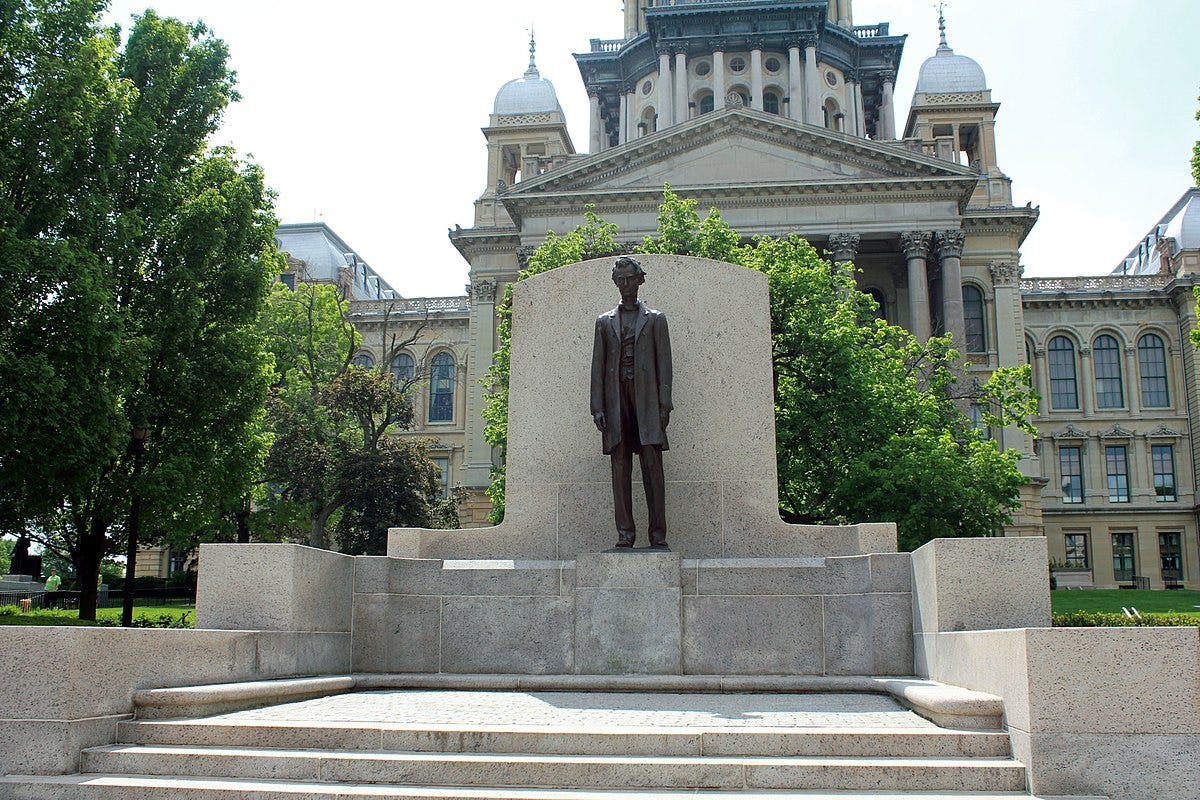
Lawmakers reintroduced an initiative to eliminate cash bail as the Pretrial Fairness Act in the 2019-2020 legislative session at the State Capitol in Springfield, Illinois. (Photo by Yinan Chen)
By Sonya Dymova, Sydney Leon, William Tong
Jeanne Bishop spends much of her time in Room 206 at Skokie Courthouse. Under the fluorescent lights and in front of Judge Paul Pavlus, the veteran Cook County public defender guides suspects of crimes through arraignments, discovery hearings and trials.
After 33 years on the job, Bishop and her colleagues adapted to a new stage of criminal procedure starting in September — pretrial detention hearings under the Illinois Pretrial Fairness Act.
“I originally thought that it would be much more messy or frustrating, but that really hasn’t materialized,” said Bishop, an activist against the death penalty.
Since the PFA took effect in late 2023, many stakeholders in the criminal legal system said pretrial detention in Cook County has become more fair and more safe. On the other hand, the bill has also created burdens for some judges and attorneys, they’ve said.
“A real focus on argumentation”
In addition to detaching a defendant’s ability to post bond from whether they’re detained before trial, the PFA also implemented a hearing process that requires judges to make pretrial detention decisions based on if a defendant poses a “real and present threat to the safety of any person or persons or the community.”
“There’s a real focus on argumentation,” Cook County Public Defender Sharone Mitchell said. “There’s a real focus on looking at the risk factors and really making a very transparent, up-down decision (about) whether somebody should be detained.”
The law also created a group of non-detainable crimes for which judges cannot hold a defendant in jail. Judges are allowed to assign conditions for pretrial release in these cases, such as electronic home monitoring or no-contact orders.
Organizers in Illinois have advocated for ending cash bail through grassroots movements, legal action and legislative reform efforts for years.
In July 2017, Cook County Court Chief Judge Timothy Evans required judges in the court system to only set bail at amounts that defendants could afford. Earlier in the year, State Rep. Christian Mitchell, a Chicago Democrat, introduced a measure that would eliminate cash bail. The bill died at the end of the legislative session.
Lawmakers reintroduced an initiative to eliminate cash bail as the Pretrial Fairness Act in the 2019-2020 legislative session.
“It feels like it’s been a decade-long fight, at least for some folks,” said State Sen. Robert Peters, a Chicago Democrat.
The PFA’s provisions entered a larger criminal justice bill called the SAFE-T Act, which Gov. J.B. Pritzker signed into law on Feb. 22, 2021.
Starting September 2022, several state’s attorneys filed lawsuits to block the Pretrial Fairness Act’s bail reform measures. They alleged the act violated the Illinois Constitution, but the state’s supreme court found otherwise. Ultimately, courts eliminated cash bail starting on Sept. 18, 2023.
“We survived on the electoral front,” Peters said. “We survived on the legislative front; We survived in the court — proof of how much we’ve organized around this issue.”
Contrary to perceptions that the act is a “get-out-of-jail-free card,” the act is accomplishing its goals so far, Bishop said.
“The violent people are separated from society and the non-violent people have their freedom,” she said. “Additionally, there are a lot of creative solutions that the judges use to tailor the release for each case.”
Between the PFA’s implementation and May 18 — the latest date for which data is available — 88% of defendants in Cook County have not been charged with a new crime while on pretrial release, according to the Cook County Circuit Court’s PFA Dashboard. About another 8% have been charged with new, non-violent crimes.
Still, there are concerns that judges may skew toward approving detention petitions out of caution, said Joshua Jones, a professor at the Northwestern Pritzker School of Law.
59% of petitions granted
“If they release one person who goes out and does something terrible, they’re going to be in the paper for that,” Jones said. “If they release 500 people where nothing happens, nobody’s going to know it.”
About 59% of pretrial detention petitions are granted and 40% of them are denied, according to the Cook County PFA dashboard. For misdemeanor detention petitions, that comparison is about 59% to 37%. For felony detention petitions, it’s about 70% to 29%.
Bishop said the PFA’s budding success in Cook County comes in large part because of early preparation efforts from multiple parts of the county’s criminal justice system.
Some lawyers on the other side of the courtroom agree. Cook County State’s Attorney Kim Foxx said her agency — the second largest prosecutorial office in the nation — spent more than a year preparing for the law, helping fuel its effective implementation.
“We did trainings, we had technical assistance, we had additional resources,” Foxx said. “We were able to put additional attorneys into this work.”
Elsewhere in the state, state’s attorney’s offices have not found as much success, Peters said. He said that’s because they focused too much on opposing the law in court rather than preparing for it. More than 60 of Illinois’ 102 state’s attorneys participated in the 2022 effort to block the law.
Staffing and resource availability continue to affect the law’s implementation, Foxx said.
“The burden on us in Cook with a staff of 800 lawyers — where we can dedicate 15 to (pretrial detention) court — is very different than say the State’s Attorney’s Office for Vermillion County, which may only have four attorneys,” she said. “I’m always mindful that the challenges of my colleagues throughout the state are different.”
Longer hearings
In general, the legislation hasn’t proved particularly burdensome for the Cook County prosecutors, Foxx said. Still, pretrial detention hearings take longer than their bond hearing predecessors, she said, because they require more extensive argument and analysis from judges.
On the public defender side, the PFA is also taking more effort from attorneys, Jones said.
“There’s a right to present evidence and do other things,” he said. “But in order to do those things, you have to prep, and you have to meet with your client.”
The PFA has also imposed a heavy burden on some appellate court judges, according to Appellate Court Justice Eugene Doherty, who serves on state’s Fourth District — based in Springfield.
“Picture our normal criminal volume — which was already in some of these districts heavy — being tripled,” Doherty said. “And no additional resources, for the most part.”
As Illinois shifts from bond to PFA hearings, the projected average number of bond or pretrial detention appeals across the state has increased from 17 to 4,557 per year, the state Supreme Court’s Pretrial Release Appeals Task Force found in March.
While the state Supreme Court has tried to re-allocate judicial resources in response, it’s not “really within their ability to match the scale of the additional burden,” Doherty said.
Foxx said this wave of increased appeals isn’t surprising, however.
“Everyone’s going to test the system, right?” she said.
As the state continues to grapple with the PFA’s effects, policymakers said they are relying on more data to inform potential changes to the law.
For instance, about 58% of pretrial detention requests for suspects of committing domestic violence are denied in Cook County, according to the county court’s PFA dashboard. Because domestic violence cases generally fall under the misdemeanor umbrella, that statistic actually reflects an increase in pretrial detentions for domestic violence charges, Foxx said.
“A cultural shift for judges who are evaluating these cases — I think that’s what you’re seeing,” she said.
Still, there is a lot of uncertainty as to why the domestic violence detention petitions play out the way they do, Foxx said.
And, detention is only one part of the pretrial system to keep an eye on, Northwestern Legal Studies Professor Abigail Barefoot said.
“Even though we’ve eliminated cash bail, part of the problem is we’re moving toward higher rates of electronic monitoring,” said Barefoot who specializes in carceral studies.
Defendants must pay for their own electronic monitoring, which could shift current practices to a more implicit system of state surveillance and control, Barefoot added.
In general, Foxx said, there’s still a lot to observe about the PFA’s effects — and how to respond.
“It’s very early for me to be able to say, ‘we need to fix this just yet,’” Foxx said.