

Incarcerated transgender people confront systemic mistreatment

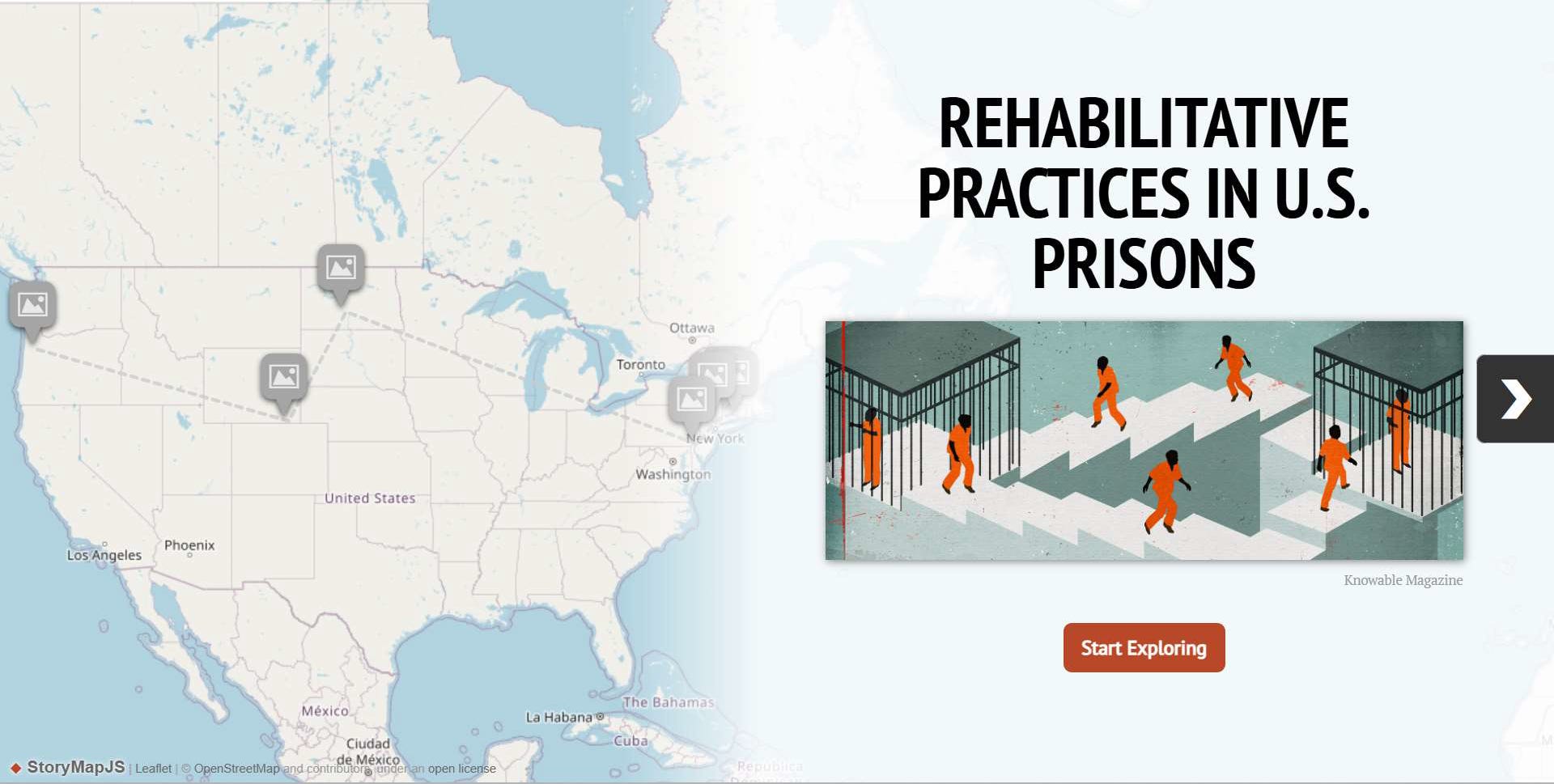
BONUS: Interactive StoryMap: Click here to begin
By Betsy Lecy, Ridhima Kodali, Arjun Khatti and Joseph Mangin
Chloe Wakabayashi began plucking her eyebrows and growing her hair to present more effeminately within a year of her 15-year sentence at Oregon State Penitentiary.
“I never felt like I was in the wrong body,” she said. “But I’ve been dressing up in women’s clothes since I was like five.”
Wakabayashi, now 55, said she started to have feelings of gender dysphoria in 2015 while incarcerated. Mayo Clinic reports that gender dysphoria refers to the psychological distress that occurs when an individual feels conflicted between their sex assigned at birth and their own gender identity. According to Black & Pink’s National LGBTQ Prisoner Survey, of transgender and nonbinary respondents, 43% have been diagnosed with gender dysphoria and 31% reported being denied these diagnoses during incarceration.
Kara Ingelhart, director of the LGBTQI+ Rights Clinic at Northwestern Pritzker School of Law, said since transgender people are often more impacted by incarceration, she makes it a practice to affirm their identity.
“The facility is a harmful place and can be really stigmatizing so having someone on the outside is affirming,” Ingelhart said.
Wakabayashi said that for her, requesting gender-affirming treatment in 2017 was easy, but not for other incarcerated individuals in the facility. This is because authorities questioned their gender identity as they presented more masculine, she said.
She also said the facility in Oregon provided utilities — like access to transgender showers, a blow dryer and a curling iron — and were careful when housing incarcerated individuals with her, to avoid the Prison Rape Elimination Act. PREA is a federal law to prevent sexual assault in correctional facilities.
She added that since the staff received training at OSP, they did an “especially” good job after the pandemic with being more informed on transgender issues and providing treatment for transgender people.
Wakabayashi credits these measures to OSP’s adoption of the Norway carceral system, focusing on rehabilitation for incarcerated individuals. For instance, OSP included meditations, Bible studies and a Japanese garden.
Uptown People’s Law Center Legal Director Nicole Schult said that Illinois is “very very far” from adopting this model due to funding and staffing issues. She added there is a cultural mindset of punishment over rehabilitation in most Illinois prisons.
Alyssa Meurer, a Larsen Justice Fellow at UPLC, said Illinois is not designed toward rehabilitation and that correctional officers in the Illinois Department of Corrections, in addition to other incarcerated people, are vocally transphobic.
Meurer, who has represented transgender individuals, said they are repeatedly misgendered and called derogatory names, leading to “serious” mental health issues. She said the word “b---h” is commonly used within the women’s prisons.
“The culture allows them to just denigrate and harass individuals,” Meurer said. “There’s kind of this culture of fear.”
Ed Yohnka, director of communications and public policy for the American Civil Liberties Union of Illinois, said that previously, no one had any expertise in treating individuals with gender dysphoria in the IDOC, but that treatment conditions did improve.
“That was especially troubling and grueling often for folks,” Yohnka said. “People were summarily rejected without a real analysis or evaluation of their health care needs.”
Schult said there has been a change toward gender-affirming care in the IDOC and there have been programs like the Prison Rehabilitation & Identity Sensitivity Mentorship Program in Illinois’ Centralia Correctional Center.
However, there has been a decrease in transgender participants in PRISM, according to the correctional oversight organization John Howard Association of Illinois.
The UPLC and the Roderick and Solange MacArthur Justice Center filed a lawsuit against the IDOC on behalf of transgender individuals who wanted to move to correctional facilities that identified with their gender. One individual seeking new placement was Janiah Monroe.
Monroe was in a men’s prison facility where she was subjected to sexual violence by correctional staff and other incarcerated individuals. Per the UPLC, the IDOC is aware that transgender women housed in men’s correctional facilities are at a higher risk for suicide, sexual assault and sexual harassment.
The IDOC did not respond to a request for an interview at the time of publication.
Of those who reported to have been sexually assaulted by a prisoner, 76% report that “prison staff intentionally placed them in circumstances where they would be at high risk of sexual assault from another prisoner,” according to the Black & Pink’s National LGBTQ Prisoner Survey.
Schult said that some people in custody and staff do not know what it means to be transgender.
“Prisons want a one size fits all answer to everything,” Schult said. “They want it to be the same for everyone. I think with trans[gender] issues, because it’s complex and it’s individualized, there’s not one box you can check.”