

Cook County's public defenders shoulder heavy caseloads with steady resolve

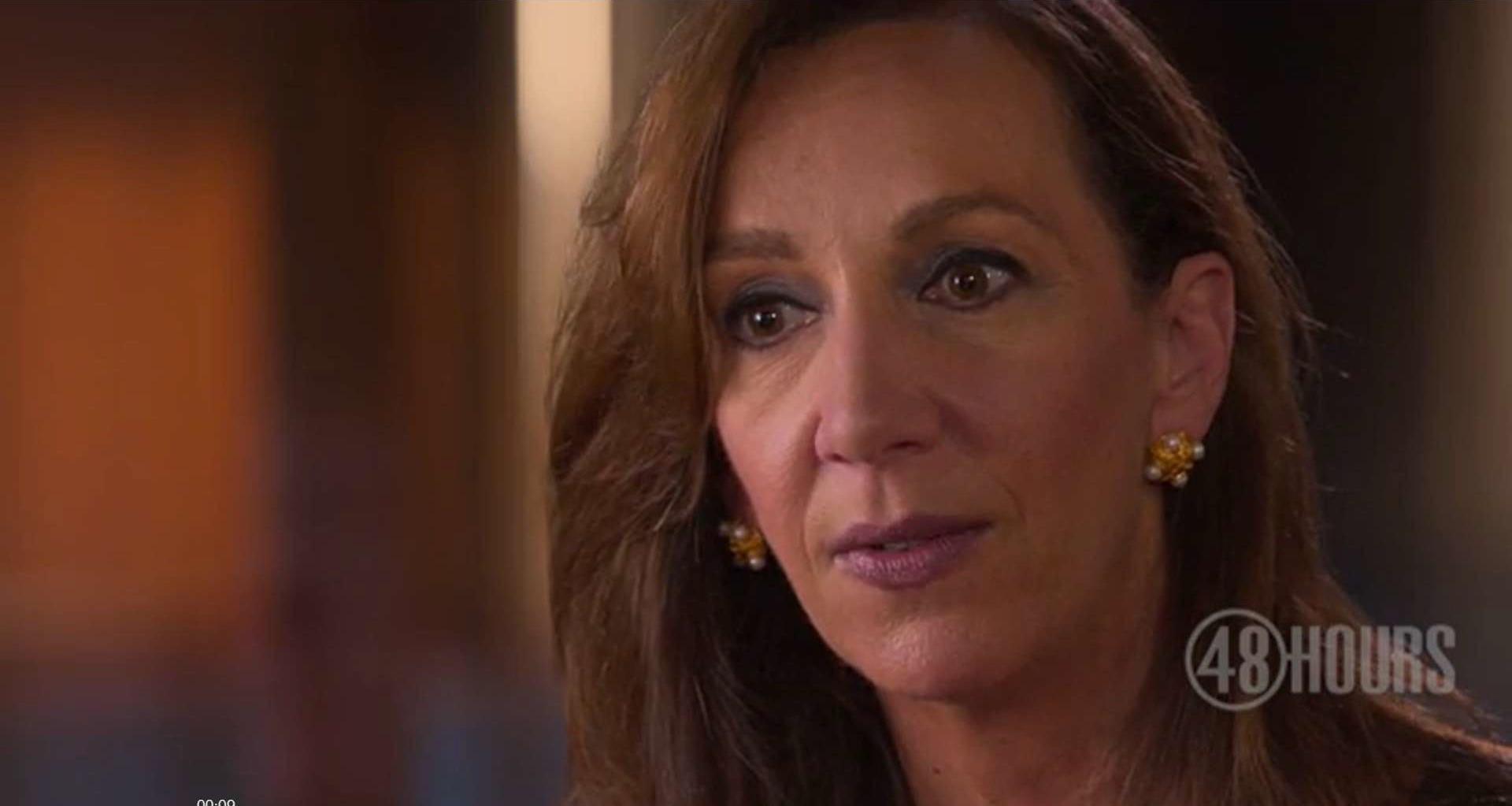
Jeanne Bishop, who became a public defender after her sister’s murder, said when she started her career as a corporate associate, she didn’t feel like she “was helping anyone who really needed help.” (TV image via CBS’s “48 Hours”)
By Mia Mraz, Sara Stanisavic, Josh Sukoff
It’s a regular day at the Skokie Courthouse. Assistant Public Defender Jeanne Bishop enters the courtroom at 9 a.m. and, defending client after client, leaves only once all the files on the judge’s table are closed. Though defendants shuffle in and out – some by their free will, some escorted in handcuffs by a sheriff – Bishop remains a constant.
With 85 percent of adults and 95 percent of juveniles represented by public defenders in Cook County, according to the UIC Law Review, Bishop and her 697 colleague attorneys wade through 3.9 million active court cases.
“At one point during COVID, I went up to 105 [cases],” Bishop said. This is well over the recommended load, which she said was around 50 per felony attorney.
Abigail Barefoot, an assistant professor of instruction in legal studies at Northwestern University, said high caseloads are a product of the overrun criminal legal system.
“They can't necessarily say, ‘I'm overworked, I have too many cases,’ because if it's not them, who else is going to take on these cases?” Barefoot said.
But private attorney Wendy Zun, with over 30 years’ prior experience as a public defender, said the heavy workload isn’t unique to public defenders.
“Three weeks ago, I was working about 80 hours in one week,” Zun said. “That's probably a little of the public defender mentality. It's hard for me to say no to a case.”
The challenges have grown since Illinois eliminated cash bail, with 53 percent of defendants held in custody for first appearance hearings, according to the Circuit Court of Cook County. Circuit Judge Laura Ayala-Gonzalez said detainment exacerbates issues defendants face, like unfamiliarity with court procedures or criminal rights.
“Most of the breakdowns in the communication are because some of those individuals are in custody,” she explained.
Bishop mitigates this by spending extra time with detained clients who seem “cut off from the world.”
Zun said the biggest difficulty for public defenders isn’t the caseload or handling detainment – it’s the emotional weight of their cases and impact on defendants’ lives.
“You have a lot of vicarious trauma,” she said. “It’s a lot to hold.”
The pressure can deter aspiring lawyers like Elizabeth Bulat, a Cardozo School of Law student, from the position.
“It low-key scares me,” Bulat admitted. “This is somebody’s life. You have to represent them or they’re going to jail.”
Defendants’ skepticism poses another challenge. Elizabeth Tarzia said many clients believe they have a worse lawyer since it is provided by the state.
“They call us penitentiary deliverers,” said Tarzia, the chief public defender of Cook County’s Second Municipal District. “They think they're getting a lesser product because they aren't paying for it.”
Zun said clients respect her more now that she is a paid attorney.
“The mythology is that public defenders are not good lawyers,” Zun said. “The reality is, some of the public defenders are the best trial lawyers I know.”
Ayala-Gonzalez observed that the public defender’s office is a “training tool,” and said their experience is more profound than other attorneys.
“They are learning from being in court every single day and trying cases that they wouldn’t ordinarily try on their own,” Ayala-Gonzalez said.
Tarzia highlighted the public defender network’s access to the experience and specialties of their colleagues.
“There's just a plethora of real institutional knowledge here that working by yourself in criminal law, you're just not going to be able to find,” she said.
New research indicates community support for criminal legal reforms and increased public defense funding. This may spark much-needed policy changes to support public defenders and their clients.
For now, despite defendant skepticism, heavy caseloads, and high pressure, there is a common perspective uniting Tarzia and Bishop: their passion for their work.
“The minute I entered law school I always wanted to do criminal law,” Tarzia said. “I just wanted to provide really good defense to people who otherwise probably wouldn't have gotten it. I kind of like the underdog.”
Bishop’s attitude on the law has evolved. She started her career as a corporate associate.
“I was absolutely terrible at it because I didn't care deeply about it,” Bishop said. “I didn't feel like I was helping anyone who really needed help.”
After her sister’s murder in 1990, Bishop became a public defender. She hasn’t looked back since.
“When my sister died, that was just the most enormous wake-up call that life is short,” Bishop said. “We don't have a minute to waste it on anything that isn't deeply meaningful.”
Tarzia said if given the chance to start over from before law school, she wouldn’t want to.
“Even all these years in… I really, really love my job. Not everything, but I never am sad when it's Sunday. I'm never sad to go to work,” Tarzia said. “I don’t think everybody can say that.”