Citizenship process hitting roadblocks as ICE crackdowns under Trump intensify
Immigration policies lengthen wait times for naturalization and create climate of fear

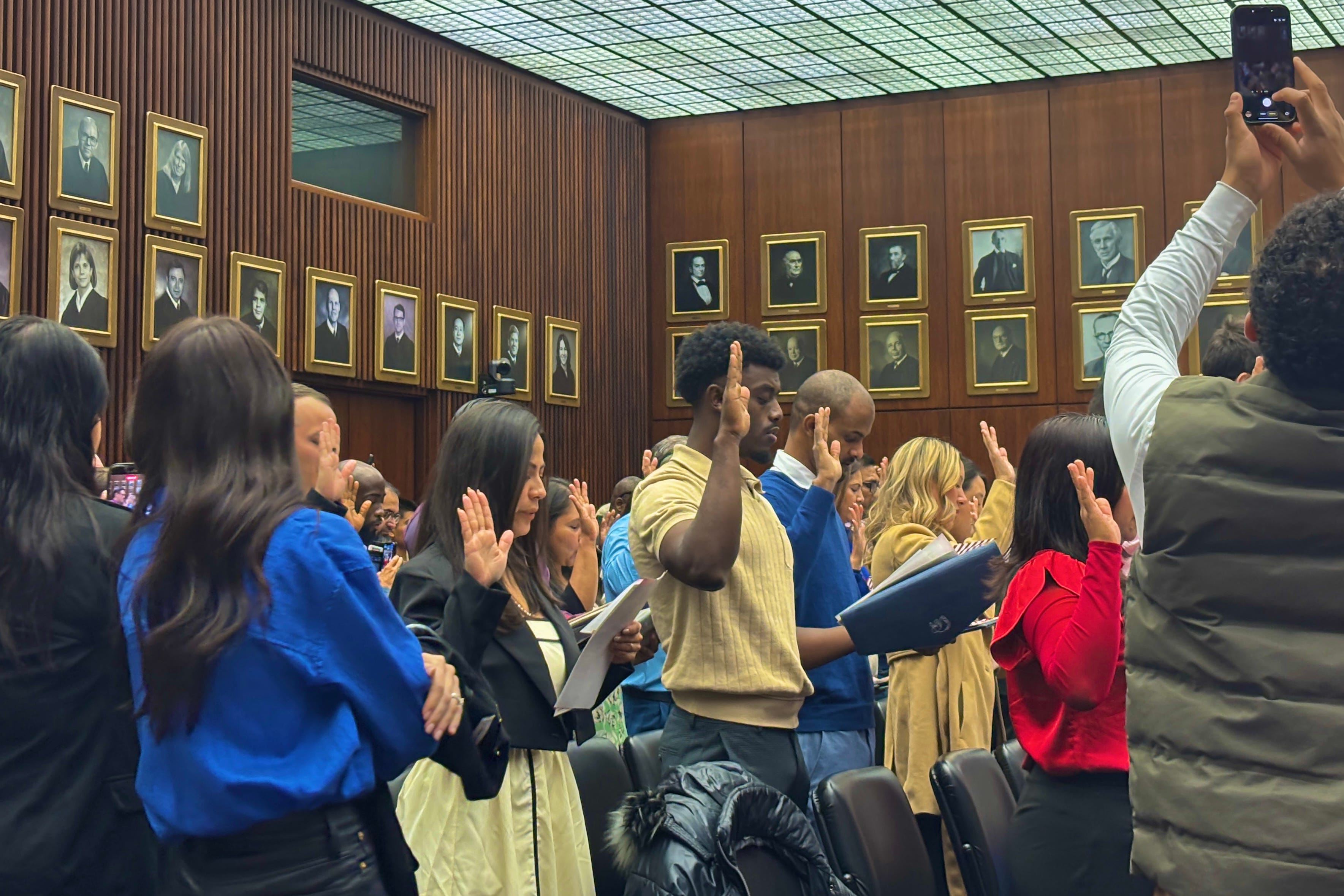
At a recent naturalization ceremony, applicants take the oath at the Everett McKinley Dirksen U.S. Courthouse in Chicago. In order to apply for naturalization, a non-citizen must be a permanent resident of the U.S. for five years, though that number can vary depending on the person’s status. ( Photo by Anna Zheng/MEDILL TrialMonitors)
CITIZENSHIP/IMMIGRATION: Click here for slides.
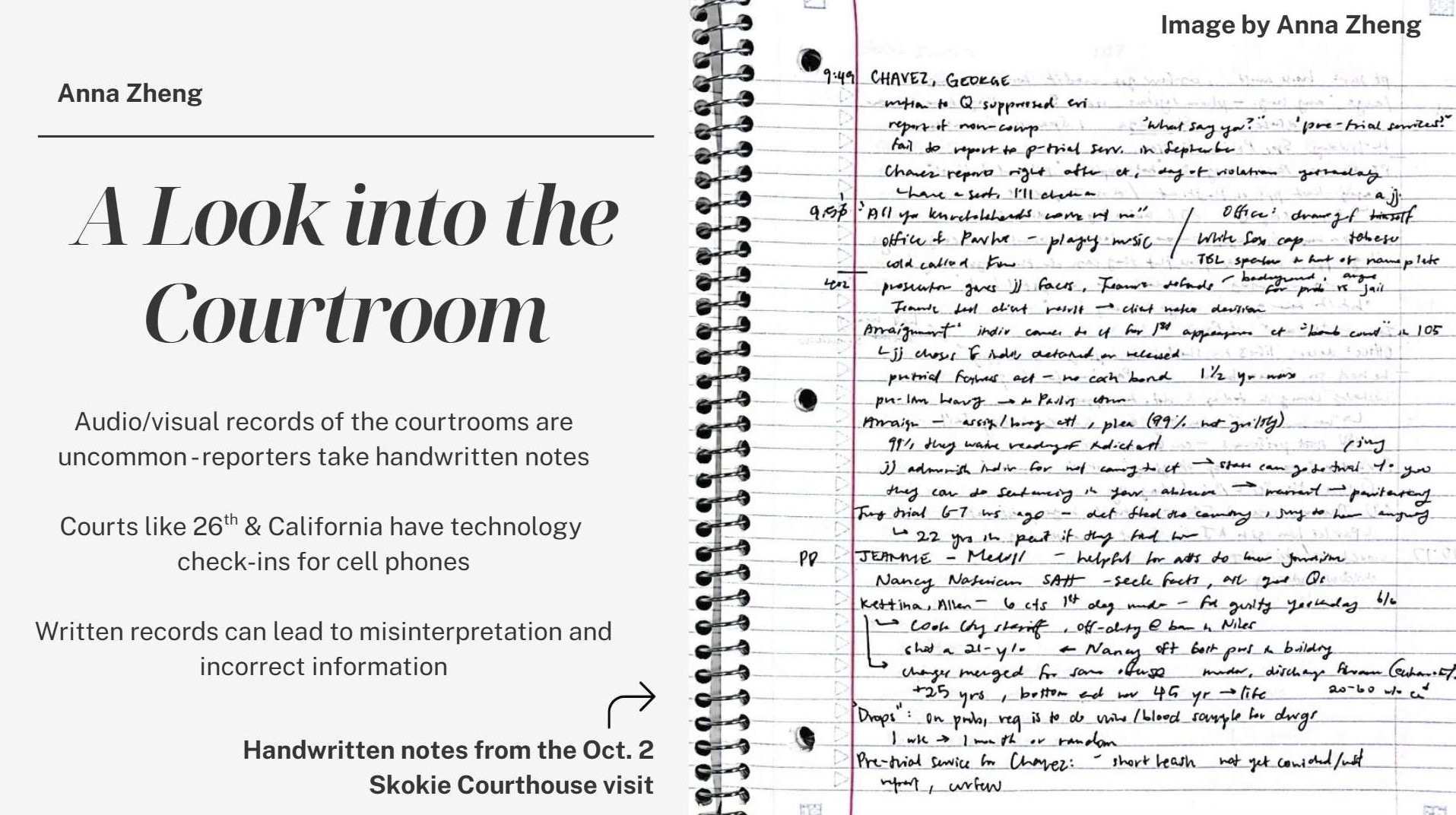
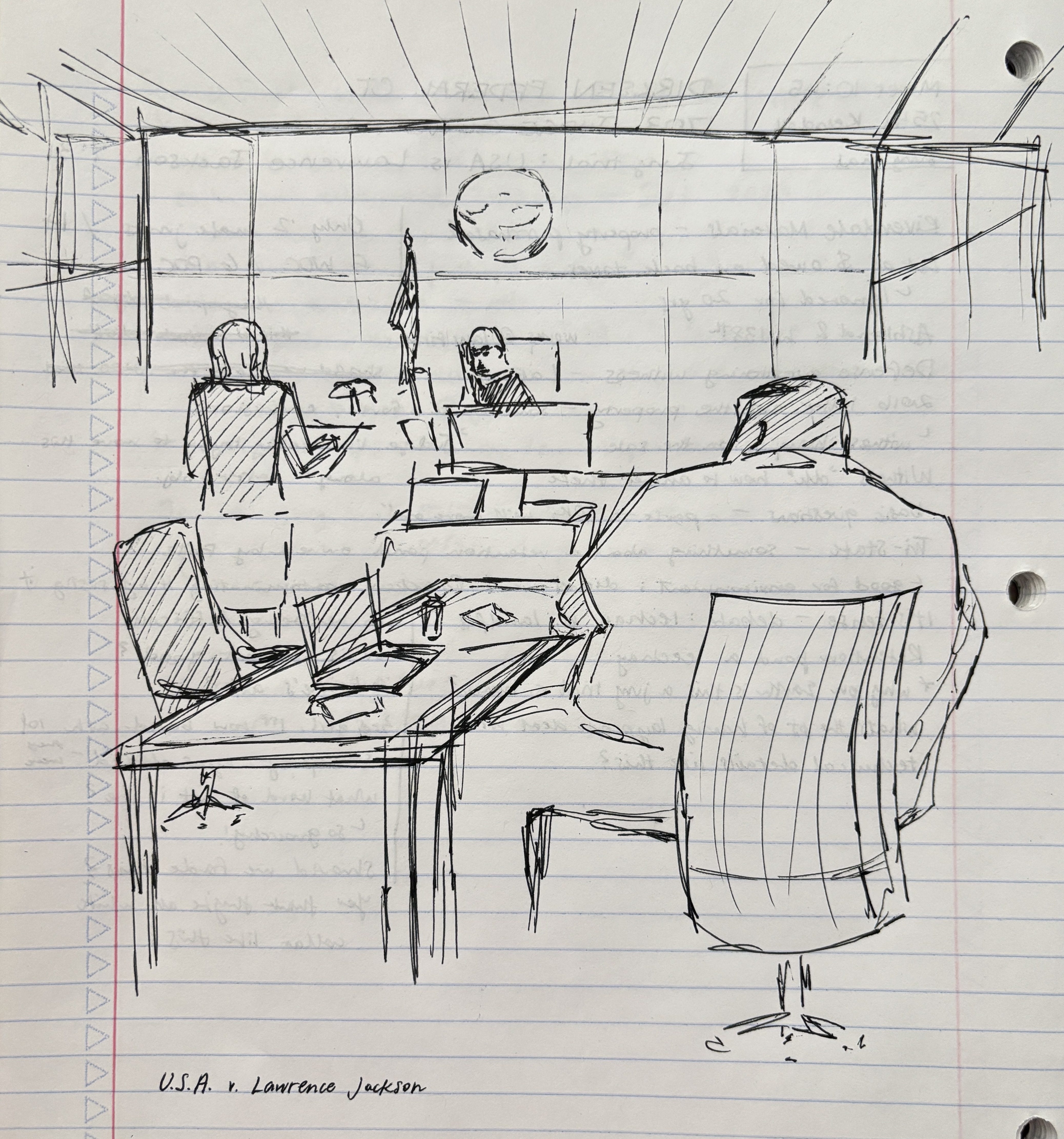
BONUS (below): A Look Into The Courtroom
By Dylan Lanier, Brooke Nelson, Helen Ryan, Anna Zheng
Election Day 2024 was a major event nationwide—and a deeply personal one for Jeanette Blanco. After 27 years in the United States, she became a citizen. Representing Mexico in a naturalization ceremony, she received her certificate and cast her provisional ballot within a few hours.
“Immigration is just very political,” said Blanco, 34, a San Francisco paralegal originally from Guanajuato, northwest of Mexico City. “With the current administration, it’s been really hard.”
For Blanco, the day was “a mix of emotions.” Naturalization had always the plan, but despite living in the U.S. since age 7, she hadn’t been able to make much progress until recently. After receiving a U visa--a status designated for crime victims—she was finally allowed to begin her path to citizenship.
‘End of the road”
Naturalization is the “end of the road” according to immigration attorney Nathan Ganong, and one of the few positive experiences in the field of immigration law.
This process has become more scrutinous of aspiring citizens. With recent crackdowns by the U.S. Immigration and Customs Enforcement, the Trump administration’s new immigration policies lengthen the road to naturalization and create an environment of intimidation and uncertainty for citizens and non-citizens alike.
Officers now conduct more rigorous investigations of applicants to review their moral character, even interviewing applicants’ neighbors. This can delay naturalization, according to immigration attorney Allen Orr. Last year, he said, naturalizations could take six months from application to citizenship — now, it can take over a year.
Jeb Scipio del Campo, 19, of Portland, Oregon, who was recently naturalized, said it took his family seven years to get citizenship since entering the country, which required lots of legal help and personal expenses.
In order to apply for naturalization, a non-citizen must be a permanent resident of the U.S. for five years, though that number can vary depending on the person’s status. Non-citizens then take tests to prove they are proficient in English and understand the basics of U.S. government and history.
Once everything is filed, the applicant completes an interview with an immigration officer. Upon review and acceptance, the applicant attends an oath ceremony and becomes a full citizen.
The process is paperwork-heavy and can be intimidating for people who have difficulty with English, criminal charges, or outstanding tax or child support payments.
Possible interferences to process
Attorney Dustin Bankston specializes in helping people with such “outstanding” issues that could interfere with their naturalization process. Due to the uncertainties surrounding immigration, he is more likely to recommend an unsure client to postpone the process, he said.
Bankston said he used to recommend applying for naturalization more often before recent, increased ICE activity.
“Worst case scenario you just get denied,” he said. “Now [immigration officials] might actually try to place you in a deportation proceeding.”
Despite the potential risks, Bankston and Ganong’s firm in the Bay Area saw an increase in naturalization cases and a decrease of asylum cases at the start of Donald Trump’s presidency. Ganong said he believed this to be due to a general anxiety — non-citizens seeking asylum feared detainment or deportation, and those seeking naturalization wanted the security that comes from citizenship.
Katarina Ramos, a managing attorney at the National Immigrant Justice Center, who helps individuals through the immigration and naturalization process, said there has been an extra level of precaution taken in recent cases.
Now prospective citizens must ask themselves if applying for naturalization and putting themselves into the “attention of the immigration system” will put them at greater risk, Ramos said.
Some individuals, fearing government retaliation, changed their travel plans because re-entering the country may threaten their status.
Jasmine Guo, a 20-year-old from New York City, who was recently naturalized, said “it’s pretty up in the air” for her parents, who hold work visas. She said they are choosing not to visit their home country of China for at least two years until she can petition for their Green Cards.
‘An erosion of due process’
The detainment of U.S. citizens at protests and raids by ICE and the Supreme Court allowing them to detain people on the basis of apparent race is unprecedented, according to Orr, whose firm is in Washington, D.C.
“It is an erosion of due process and civility,” Orr said. “In no other place in our government is it okay to single people out by their race, ethnicity, language, and where they work.”
The recent raids have created what Ramos called a “crisis” in vulnerable communities.
“I see friends of friends getting picked up, or friends’ parents,” Ramos said. “Nobody knows where they went. They went out to get groceries and they never came back.”
Within the courts, administrative issues leave judge shortages and lengthen the immigration and naturalization processes. Over 125 judges nationwide have been fired or resigned since the beginning of Trump’s second term, according to retired immigration judge Dana Leigh Marks, creating a backlog in immigration cases.
HIAS is a nonprofit organization that supports refugees and immigrants through this increasingly long process. Program manager Rachael Moreno noted how such policy updates make things volatile.
The Trump administration’s naturalization and immigration policy “has really dramatically changed the landscape of how applications are processed,” Moreno said. It has altered how paperwork is done, the tests people have to take, and the requirements they must meet to even submit forms in the first place.
The immigration system, Ramos noted, is broken and has been for a long time.
“It’s horrifying,” she said. “I’ve cried so many times, so many times.”
Despite these barriers, naturalizations still occur today. On Nov. 6, 98 people from 39 countries became American citizens at the Everett McKinley Dirksen U.S. Courthouse in Chicago.
Judge John Z. Lee, who presided over the ceremony, encouraged new citizens to register to vote and emphasized the importance of America as “a nation of immigrants.”
“Diversity makes us and keeps us strong,” he said. “One citizenship — mine and yours — binds us as brothers and sisters.”
Dylan Lanier, Brooke Nelson, Helen Ryan, Anna Zheng