

As veterans courts expand, nonprofits step in to bridge service gaps

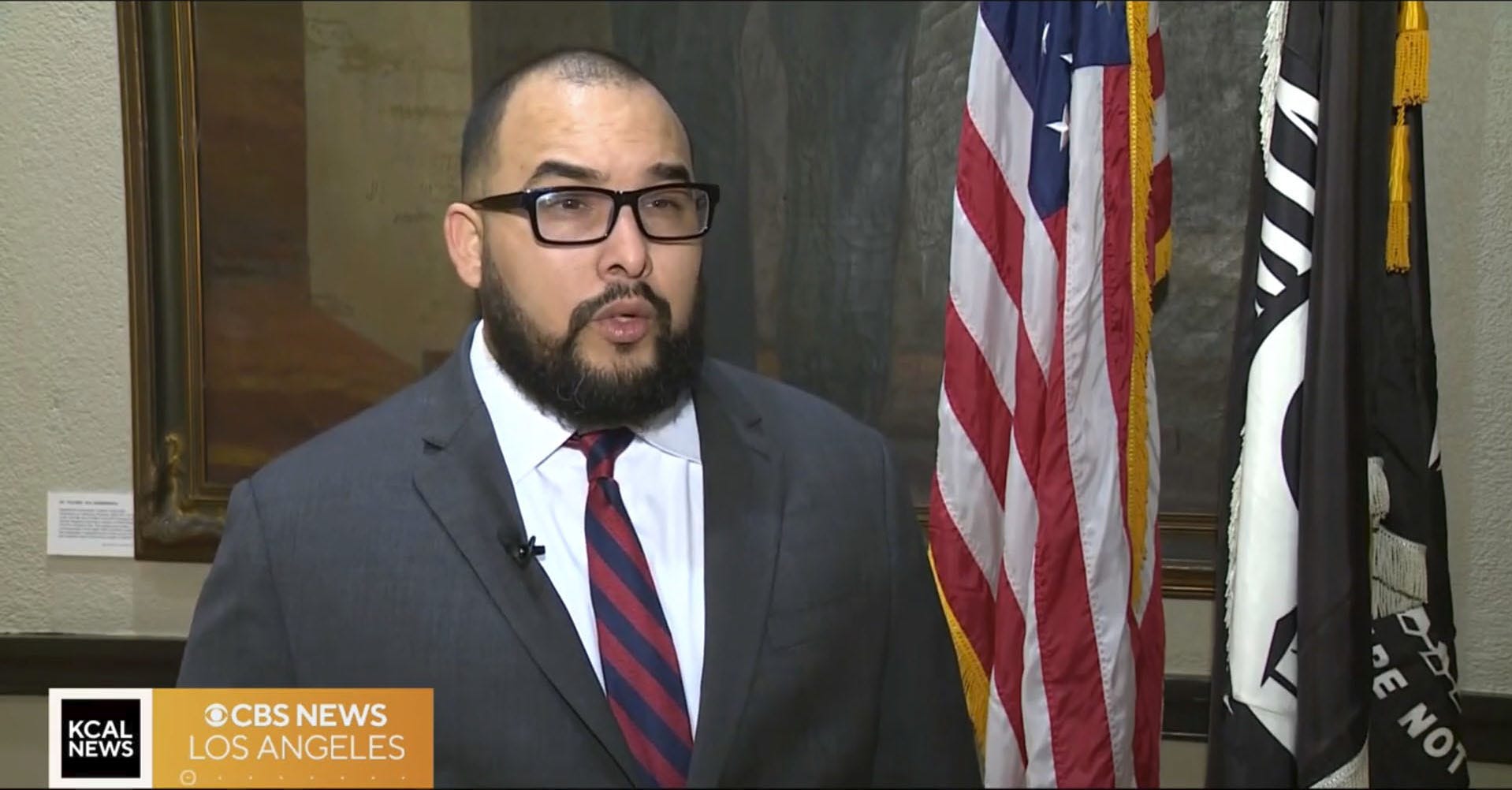
Manuel Gomez, a Navy veteran, told Medill Trial Monitors in October that 78% of justice-involved veteran women have reported experiencing sexual assault during their military service. (TV image via CBS News Los Angeles/click: video link
VETS TREATMENT IN LEGAL SYSTEM: Click here for slides.
By Natasha Torkzaban, Yeabsira Getachew, Madelyn Powers, Anthony Scarmozzino
For Manuel Gomez, the executive director of VetPhoenix, calls from a veteran ready to enter his program rarely come on schedule. He must be ready at a moment’s notice to ensure no one falls through the cracks during the transition from incarceration.
VetPhoenix is a California-based non-profit organization focused on helping veterans who have been incarcerated through peer support and comprehensive reentry programs—including trauma-informed mental health treatment, substance abuse recovery and assistance with finding stable housing and employment.
“We identify the causative factors, we develop evidence, and then we try to connect you to those critical veteran services,” Gomez said. “While at the same time, we stabilize you and give you the best shot at being successful, post-military, post-prison.”
Led by multiple formerly incarcerated veterans who are now social workers, researchers and advocates—like Gomez—VetPhoenix is part of a national trend of providing resources for justice-involved veterans, both during and after their time in the legal system.
The U.S. has seen a significant expansion in resources for justice-involved veterans. Since 2009, the number of Veterans Treatment Courts alone has surged from 19 to more than 500, according to the National Treatment Court Resource Center. This growth in official capacity has been mirrored by non-profit organizations, which have also expanded to provide essential post-incarceration reentry services, such as those offered by VetPhoenix and similar programs.
Michael Hood, a veteran and associate judge who presides over cases for Veterans Treatment Court in Cook County, said that the mission of Veterans Treatment Court is recovery.
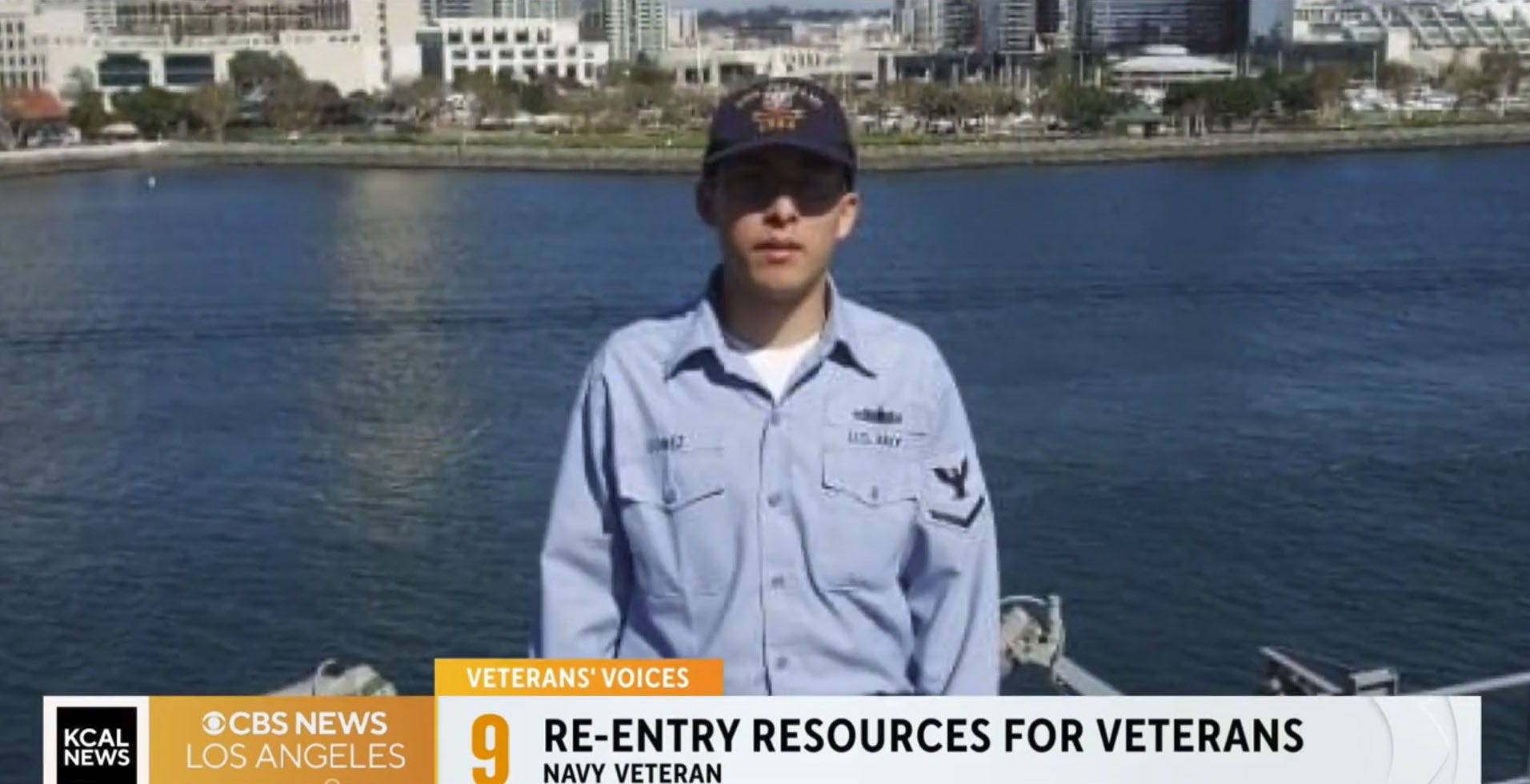
From 2005 to 2011, Gomez served in the U.S. Navy aboard the USS Abraham Lincoln and USS Peleliu. (TV image via CBS News Los Angeles)
Veterans Treatment Court is one of Cook County’s Problem-Solving Courts. All defendants are individuals who previously served in the military and became involved in the criminal legal system.
Hood said that rather than punishing veterans, the court focuses on pushing veterans forward in their rehabilitative process.
“We want them to continue to make appointments and continue to prove and continue to work hard in whatever it is,” Hood said. “If it’s a job placement course, continue to work on it. If it’s anger management, continue to work on it. If it’s mental health treatment, continue to work on it.”
Scott Tirocchi, division director for Justice for Vets, has spent three decades working across community treatment, jails, prisons and courts in Rhode Island.
A 21-year Army Reserve and National Guard veteran, Tirocchi said he noticed a spike in incarcerated veterans during the Iraq and Afghanistan wars when he worked as a social worker in a Rhode Island jail.
“I recognized a lot of individuals that were veterans and I was also serving in the military myself at that time, so it kind of hit a spot,” he said.
Tirocchi later joined Justice for Vets in 2015, an organization that provides free, on-site training to Veterans Treatment Courts nationwide on how to structure and run these programs.
He estimates the organization has assisted roughly 400 of the nation’s more than 500 veterans courts, noting that the VA’s higher tally of more than 700 reflects a broader definition of what qualifies as a VTC.
Tirocchi said veterans entering the system often face a mix of criminogenic risks—such as substance use and unstable peer networks—alongside PTSD, alcohol misuse and traumatic brain injury.
Tirocchi said Veterans Treatment Courts are designed to respond to those underlying issues. The courts integrate the Department of Veterans Affairs, a Veterans Justice Outreach specialist, and trained peer mentors in the courtroom.
Tirocchi said the evidence-based treatment veterans receive is transformative.
“You meet someone who’s a shadow of who they once were, and a year later they’re a completely different person,” he said.
Even within a prison or jail, organizations such as the University of Chicago’s Office for Military-Affiliated Communities provide enrichment opportunities for incarcerated veterans.
Nick Macius, the director of the organization’s writing program, teaches a weekly creative writing and literature class in the veterans tier of the Cook County jail. Macius said that, in the face of confinement, writing serves as an “outlet [for veterans] to express themselves in ways that they’re just unable to otherwise.”
“I think there’s a basic distinction between something that’s clinically focused and something that’s just art for art’s sake,” Macius said. “I’m there because I believe that creative writing and literature is just powerful in and of itself.”
Macius is a U.S. Marine Corps veteran himself. He said that his shared identity with his students helps him resonate with their work on a deeper level. -
“Even though a lot of their writing doesn’t draw on their veteran identity or even when it doesn’t, I think just being able to walk into that room and have a basic shared affinity or lived experience helps me walk into that room and connect with them,” Macius said.
The support veterans receive while incarcerated is only one part of the reentry pipeline. After release, organizations like Hope Hall in Melrose Park, Illinois, help veterans navigate new sets of challenges.
Hope Hall, a transitional housing facility for veterans, accepts formerly incarcerated veterans from the Chicagoland area. Felicia Harris, Hope Hall’s assistant manager and service coordinator, said that the treatment of veterans in prisons and jails plays a big role in their reentry processes.
While Harris said that much progress has been made, there is still a long way to go.
“If we have better people in these positions that care about their overall well-being, then we would have less people coming out of our incarceration system depressed, suicidal, self-medicating on drugs and alcohol, and feeling hopeless,” Harris said. “The major thing is you have to treat people right.”
Natasha Torkzaban, Yeabsira Getachew, Madelyn Powers, Anthony Scarmozzino